At the opening of the story
Harry Pawns the Television
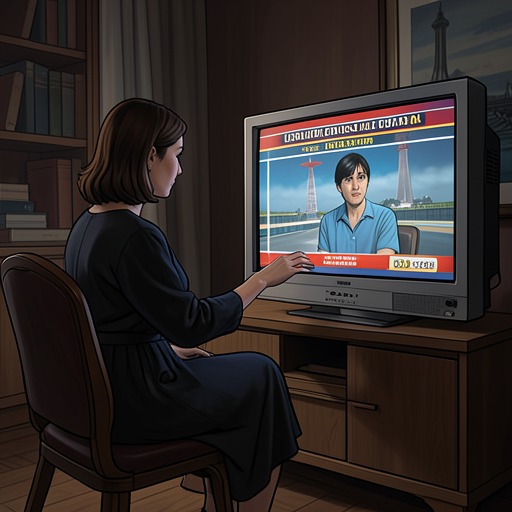
[Harry Goldfarb](entity:character-recall-character-harry-goldfarb-868cd8facc82) removes his mother’s [Television set](entity:object-recall-object-television-set-2d822d241893) from their apartment and takes it to [Abe Rabinowitz](entity:character-recall-character-abe-rabinowitz-9960caa3588b)’s pawnshop, while [Sara Goldfarb](entity:character-recall-character-sara-goldfarb-c79f81ba919c) hides in a closet rather than watch him leave with it. [Harry](entity:character-recall-character-harry-51d33e4b3663) insists that the set is only being borrowed, but his treatment of it makes clear how little security Sara has in her home.
Immediately afterward
A Score with Tyrone
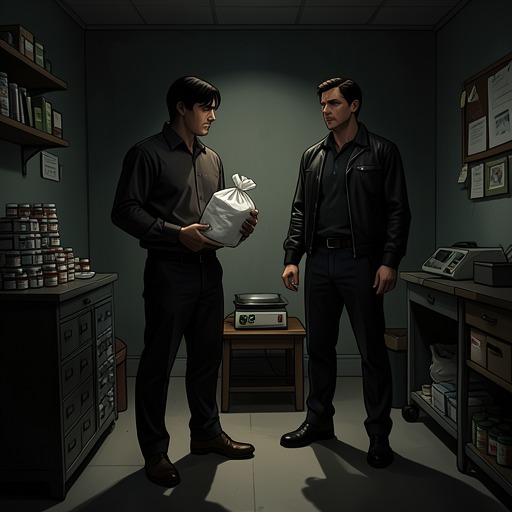
Outside the pawnshop, [Harry Goldfarb](entity:character-recall-character-harry-goldfarb-868cd8facc82) meets [Tyrone C. Love](entity:character-recall-character-tyrone-c-love-fb4226a151b4), and the two head toward a supplier in the Bronx. They talk about the money from the pawned set as if it could fund a business, but they spend it on [Heroin](entity:object-recall-object-heroin-0ab2bcffb178) instead.
During their first high
The Dealer’s Dream
After taking the drug, [Harry Goldfarb](entity:character-recall-character-harry-goldfarb-868cd8facc82) and [Tyrone C. Love](entity:character-recall-character-tyrone-c-love-fb4226a151b4) imagine buying a large supply, cutting it, and hiring other users to sell it. They picture wealth and leisure while assuring themselves they will not become dependent on their own product.
The following day
Sara Redeems the Set
[Sara Goldfarb](entity:character-recall-character-sara-goldfarb-c79f81ba919c) returns to [Abe Rabinowitz](entity:character-recall-character-abe-rabinowitz-9960caa3588b)’s shop with money and takes back her [Television set](entity:object-recall-object-television-set-2d822d241893). She refuses to report [Harry Goldfarb](entity:character-recall-character-harry-goldfarb-868cd8facc82) to the police, explaining that he is her only child and that she still hopes he will settle down and make her a grandmother.
Early in the story
A Life Framed by Television
Alone in her apartment, [Sara Goldfarb](entity:character-recall-character-sara-goldfarb-c79f81ba919c) watches commercials and melodramas as if their happy endings were assurances about her own life. Her memories of [Seymour Goldfarb](entity:character-recall-character-seymour-goldfarb-9bc55869d433), her concern for [Harry Goldfarb](entity:character-recall-character-harry-goldfarb-868cd8facc82), and her habit of eating sweets all mingle with the imagined comfort of the screen.
A few days after the opening
The Quiz-Show Call
A representative of [McDick Corporation](entity:organization-recall-organization-mcdick-corporati-29b3354937b8) phones [Sara Goldfarb](entity:character-recall-character-sara-goldfarb-c79f81ba919c) and tells her that she may appear on a television program. The call gives her a future to anticipate and a reason to imagine herself once again admired and needed.
That evening
The Red Dress Returns
[Sara Goldfarb](entity:character-recall-character-sara-goldfarb-c79f81ba919c) searches her closet for an outfit and tries on the red dress she wore at [Harry Goldfarb](entity:character-recall-character-harry-goldfarb-868cd8facc82)’s bar mitzvah. It no longer fits, but its association with [Seymour Goldfarb](entity:character-recall-character-seymour-goldfarb-9bc55869d433) and a happier family past makes it the center of her new hope.
The next day
Sara Shares Her News
[Sara Goldfarb](entity:character-recall-character-sara-goldfarb-c79f81ba919c) tells [Ada](entity:character-recall-character-ada-10673482132c) that she has been invited to appear on television. The two friends speculate about the program and its prizes, turning Sara’s private fantasy into a shared neighborhood expectation.
Soon after the call
The Crash Diet Begins
Determined to fit into her red dress, [Sara Goldfarb](entity:character-recall-character-sara-goldfarb-c79f81ba919c) visits the library for a quick weight-loss plan. She buys pastries on the way, but tells herself that she will begin the diet the next day and that the television appearance will make the sacrifice worthwhile.
The first day of dieting
A Diet of Eggs and Grapefruit
[Sara Goldfarb](entity:character-recall-character-sara-goldfarb-c79f81ba919c) discovers that the diet allows very little food and tries to endure the hunger by drinking water and imagining herself thin. The red dress and the prospect of television fame become more compelling to her than the ordinary needs she is suppressing.
During the early summer
Harry and Tyrone Miss Work
[Harry Goldfarb](entity:character-recall-character-harry-goldfarb-868cd8facc82) and [Tyrone C. Love](entity:character-recall-character-tyrone-c-love-fb4226a151b4) discuss earning money by loading newspapers, but news of a potent batch of [Heroin](entity:object-recall-object-heroin-0ab2bcffb178) and a user’s overdose sends them back to the streets instead. Their supposed business plan repeatedly gives way to the immediate promise of getting high.
That night
The Morgue Gathering
[Harry Goldfarb](entity:character-recall-character-harry-goldfarb-868cd8facc82) and [Tyrone C. Love](entity:character-recall-character-tyrone-c-love-fb4226a151b4) join other users at the [Bronx County Morgue](entity:location-recall-location-bronx-county-morgue-5a470d01b1f1), where the group prepares and injects [Heroin](entity:object-recall-object-heroin-0ab2bcffb178). The setting becomes a refuge from ordinary life, while the ritual of using makes dependence seem like fellowship and ease.
During a later gathering
Tony Destroys the Television
At a party after drug use, Tony Bowers was angered by a TV program and shot the television set. Others laughed and cheered the destruction, taking the temporary violence as relief, although their own lives were still controlled by addiction
In the early summer
Marion Recalls Her Art
[Marion Silver](entity:character-recall-character-marion-silver-72a99b99b657) remembers the sense of purpose she once found in [Italy](entity:location-recall-location-italy-85c2492cd54b), especially in [Naples](entity:location-recall-location-naples-13ce8e2c4961), where painting and the surrounding art seemed to make life vivid. With [Harry Goldfarb](entity:character-recall-character-harry-goldfarb-868cd8facc82), she imagines that they can restore that lost creative life by opening a café-theater.
Soon after the café-theater dream
Marion Buys Art Supplies
[Marion Silver](entity:character-recall-character-marion-silver-72a99b99b657) buys sketch pads, pencils, and charcoal, hoping to begin drawing again. The supplies briefly reconnect her with a life she had once pursued, though her plans still depend on the imagined future she shares with [Harry Goldfarb](entity:character-recall-character-harry-goldfarb-868cd8facc82).
A few nights later
The Newspaper Jobs Begin
With encouragement from [Marion Silver](entity:character-recall-character-marion-silver-72a99b99b657), [Harry Goldfarb](entity:character-recall-character-harry-goldfarb-868cd8facc82) and [Tyrone C. Love](entity:character-recall-character-tyrone-c-love-fb4226a151b4) take the newspaper-loading jobs they had discussed. They work energetically on stimulants, but their wages will not be paid until the end of the week, making their commitment to legitimate work short-lived and precarious.
At the end of the workweek
Money for the First Deal
[Harry Goldfarb](entity:character-recall-character-harry-goldfarb-868cd8facc82) and [Tyrone C. Love](entity:character-recall-character-tyrone-c-love-fb4226a151b4) collect their pay and discover that they still need more money to buy a substantial amount of [Heroin](entity:object-recall-object-heroin-0ab2bcffb178). [Marion Silver](entity:character-recall-character-marion-silver-72a99b99b657) supplies the shortfall, and the friends set out to turn their earnings into the dealing business they believe will free them from the streets.
Soon after they obtain the money
The First Heroin Operation
[Harry Goldfarb](entity:character-recall-character-harry-goldfarb-868cd8facc82) and [Tyrone C. Love](entity:character-recall-character-tyrone-c-love-fb4226a151b4) acquire [Heroin](entity:object-recall-object-heroin-0ab2bcffb178), mix it with cutting agents, and begin selling it through their contacts. They initially tell themselves that they will take only small tastes, but the work brings the drug closer to them and increases their exposure to it.
As their business expands
The Imagined Briefcase Fortune
[Harry Goldfarb](entity:character-recall-character-harry-goldfarb-868cd8facc82) imagines a future in which he and [Tyrone C. Love](entity:character-recall-character-tyrone-c-love-fb4226a151b4) move large quantities of [Heroin](entity:object-recall-object-heroin-0ab2bcffb178), carry a fortune in a briefcase, and retire to travel with [Marion Silver](entity:character-recall-character-marion-silver-72a99b99b657). The fantasy of orderly, temporary dealing disguises how thoroughly their ambitions and their drug use are becoming entangled.
During the early growth of the business
Harry Buys Sara a New Set
Feeling guilty about repeatedly pawning his mother’s [Television set](entity:object-recall-object-television-set-2d822d241893), [Harry Goldfarb](entity:character-recall-character-harry-goldfarb-868cd8facc82) buys [Sara Goldfarb](entity:character-recall-character-sara-goldfarb-c79f81ba919c) a large new one from [Macy’s](entity:location-recall-location-macy-s-8fe8d5af57d3). The gesture is a genuine attempt to show affection, but his purchase also lets him imagine that money can repair the damage in their relationship.
Shortly after the new set is delivered
Harry Visits His Mother
[Harry Goldfarb](entity:character-recall-character-harry-goldfarb-868cd8facc82) visits [Sara Goldfarb](entity:character-recall-character-sara-goldfarb-c79f81ba919c), who is excited about her television invitation and her progress toward fitting the red dress. As he kisses and embraces her, he notices her grinding her teeth and recognizes signs that she is taking stimulants.
During the same visit
Sara Defends the Pills
[Harry Goldfarb](entity:character-recall-character-harry-goldfarb-868cd8facc82) confronts [Sara Goldfarb](entity:character-recall-character-sara-goldfarb-c79f81ba919c) about the pills, but she insists they came from a doctor and are helping her lose weight. She explains that television gives her a reason to get up and something to look forward to, and [Harry](entity:character-recall-character-harry-51d33e4b3663) cannot make her relinquish the one hope that has made her feel alive.
Over the following weeks
The Business Turns Profitable
[Harry Goldfarb](entity:character-recall-character-harry-goldfarb-868cd8facc82) and [Tyrone C. Love](entity:character-recall-character-tyrone-c-love-fb4226a151b4) sell [Heroin](entity:object-recall-object-heroin-0ab2bcffb178) at a growing pace, recruit other sellers, and store their earnings while telling themselves they are approaching a legitimate future. They begin taking more of their own product, even as the money appears to confirm their belief that they are in control.
During the business’s early success
Harry Plans Another Gift
[Harry Goldfarb](entity:character-recall-character-harry-goldfarb-868cd8facc82) decides that a new [Television set](entity:object-recall-object-television-set-2d822d241893) is the right gift for [Sara Goldfarb](entity:character-recall-character-sara-goldfarb-c79f81ba919c), believing it will make up for his earlier neglect. He uses [Heroin](entity:object-recall-object-heroin-0ab2bcffb178) to steady himself before shopping, showing how quickly even a loving intention has become linked to the drug.
After her initial dieting attempt
Sara Begins Taking Diet Pills
Frustrated by hunger and encouraged by a neighbor’s results, [Sara Goldfarb](entity:character-recall-character-sara-goldfarb-c79f81ba919c) visits a doctor and receives a regimen of colored [Diet pills](entity:object-recall-object-diet-pills-97984453b266). She treats the pills as medicine and celebrates their early effects, not recognizing that the stimulants are replacing food and beginning to shape her moods and behavior.
During the first weeks of the regimen
The Pills Bring Euphoria
[Sara Goldfarb](entity:character-recall-character-sara-goldfarb-c79f81ba919c) feels energetic and talkative, drinks increasingly large amounts of coffee, and enjoys the rapid loss of weight. Her red dress fits more easily, while the attention of [Ada](entity:character-recall-character-ada-10673482132c) and the other women reinforces her belief that television fame is close.
As their operation grows
Harry and Tyrone Take a Large Shipment
[Harry Goldfarb](entity:character-recall-character-harry-goldfarb-868cd8facc82) and [Tyrone C. Love](entity:character-recall-character-tyrone-c-love-fb4226a151b4) arrange a larger [Heroin](entity:object-recall-object-heroin-0ab2bcffb178) deal, moving money through two exchanges and carefully avoiding attention. Their success appears to bring them nearer to the wealth they want, but their growing confidence also encourages more frequent use.
During the period of rising sales
Harry Reconciles with Sara
[Harry Goldfarb](entity:character-recall-character-harry-goldfarb-868cd8facc82) tells [Sara Goldfarb](entity:character-recall-character-sara-goldfarb-c79f81ba919c) that he has bought her a new [Television set](entity:object-recall-object-television-set-2d822d241893) and apologizes for treating her badly. Their moment of tenderness briefly makes him feel whole, but the visit ends without resolving her dependence on [Diet pills](entity:object-recall-object-diet-pills-97984453b266) or his own growing addiction.
Later in the season
The Supply Weakens
The particularly potent [Heroin](entity:object-recall-object-heroin-0ab2bcffb178) that [Harry Goldfarb](entity:character-recall-character-harry-goldfarb-868cd8facc82) and [Tyrone C. Love](entity:character-recall-character-tyrone-c-love-fb4226a151b4) have been selling becomes harder to obtain, and subsequent supplies are weaker. Although they recognize that the change threatens their business, they keep using and reassure themselves that better product will return.
After the potent supply disappears
The First Attempts to Quit
[Harry Goldfarb](entity:character-recall-character-harry-goldfarb-868cd8facc82), [Tyrone C. Love](entity:character-recall-character-tyrone-c-love-fb4226a151b4), [Marion Silver](entity:character-recall-character-marion-silver-72a99b99b657), and [Alice](entity:character-recall-character-alice-c37947fad76f) decide to stop using when they cannot find their preferred [Heroin](entity:object-recall-object-heroin-0ab2bcffb178). The discomfort and anxiety become difficult to bear, and they return to the drug, convincing themselves that the failed attempt was only a temporary delay.
During the worsening shortage
Brody Is Killed
[Tyrone C. Love](entity:character-recall-character-tyrone-c-love-fb4226a151b4) learns that [Brody](entity:character-recall-character-brody-f3a662d8d618), one of their important suppliers, has been killed. His death cuts off a reliable source and leaves [Harry Goldfarb](entity:character-recall-character-harry-goldfarb-868cd8facc82) and Tyrone scrambling for new contacts as the supply crisis deepens.
Soon after Brody’s death
Tyrone Is Arrested
While seeking [Heroin](entity:object-recall-object-heroin-0ab2bcffb178), [Tyrone C. Love](entity:character-recall-character-tyrone-c-love-fb4226a151b4) is stopped by narcotics officers who take his money and arrest him. He hides the drug before reaching the station, then calls [Marion Silver](entity:character-recall-character-marion-silver-72a99b99b657), who arranges for [Harry Goldfarb](entity:character-recall-character-harry-goldfarb-868cd8facc82) to bail him out.
During Tyrone’s detention
The Old Addict’s Rules
In the holding cell, [Tyrone C. Love](entity:character-recall-character-tyrone-c-love-fb4226a151b4) listens to an old addict recount decades of jail, petty theft, and survival. The man warns against attachment to women and advocates keeping crimes small, but Tyrone rejects the prospect of becoming an addict whose whole life revolves around obtaining a fix.
After his release
Tyrone Returns to Alice
[Harry Goldfarb](entity:character-recall-character-harry-goldfarb-868cd8facc82) gets [Tyrone C. Love](entity:character-recall-character-tyrone-c-love-fb4226a151b4) out of custody, and Tyrone returns to [Alice](entity:character-recall-character-alice-c37947fad76f) and uses [Heroin](entity:object-recall-object-heroin-0ab2bcffb178) to quiet the effects of detention. Their tenderness briefly suggests a life beyond the drug, though Tyrone is already measuring the relationship against the demands of his habit.
As winter arrives
Winter Tightens the Crisis
The [Heroin](entity:object-recall-object-heroin-0ab2bcffb178) shortage spreads across [New York City](entity:location-recall-location-new-york-city-65df0a129d4c), and [Harry Goldfarb](entity:character-recall-character-harry-goldfarb-868cd8facc82) and [Tyrone C. Love](entity:character-recall-character-tyrone-c-love-fb4226a151b4) spend more of their time searching dangerous streets and abandoned buildings for a supply. The cold, violence, and desperation turn their former dealing into a struggle merely to stay well enough to continue searching.
During the same winter
Sara’s Anxiety Escalates
[Sara Goldfarb](entity:character-recall-character-sara-goldfarb-c79f81ba919c) continues taking [Diet pills](entity:object-recall-object-diet-pills-97984453b266) and drinking coffee, but the initial euphoria gives way to tremors, agitation, and the recurring conviction that danger is near. She calls [McDick Corp.](entity:organization-recall-organization-mcdick-corp-960bc28f4c23) repeatedly to ask about her television appearance, while the office staff treats her increasingly frantic calls as an annoyance.
As Sara’s symptoms worsen
The Red Dress Becomes a Fixation
[Sara Goldfarb](entity:character-recall-character-sara-goldfarb-c79f81ba919c) wears the red dress and watches quiz programs, imagining herself crossing the stage and winning admiration. In her visions, the television’s performers leave the screen to inspect and condemn her shabby apartment, turning her hoped-for public triumph into a source of shame and persecution.
After her fear makes ordinary errands difficult
Sara Receives Valium
[Sara Goldfarb](entity:character-recall-character-sara-goldfarb-c79f81ba919c) struggles to leave her apartment and is helped by [Ada](entity:character-recall-character-ada-10673482132c) and another friend to see her doctor. He dismisses her confusion as unimportant and provides Valium, which briefly calms her without addressing the effects of the stimulants or her lack of nourishment.
During the winter shortage
Marion Borrows from Arnold
With [Harry Goldfarb](entity:character-recall-character-harry-goldfarb-868cd8facc82) and [Tyrone C. Love](entity:character-recall-character-tyrone-c-love-fb4226a151b4) unable to obtain enough [Heroin](entity:object-recall-object-heroin-0ab2bcffb178), [Marion Silver](entity:character-recall-character-marion-silver-72a99b99b657) asks [Arnold](entity:character-recall-character-arnold-ca8aae243557) for money. She has sex with him to secure the loan, telling herself that the act is no different from their past encounters even as she feels increasingly detached and ashamed.
As the shortage becomes acute
The Street-Level Scramble
[Harry Goldfarb](entity:character-recall-character-harry-goldfarb-868cd8facc82) and [Tyrone C. Love](entity:character-recall-character-tyrone-c-love-fb4226a151b4) move deeper into the most dangerous areas of the city, competing with sick users for scarce [Heroin](entity:object-recall-object-heroin-0ab2bcffb178). They begin withholding small amounts from one another and lying to [Marion Silver](entity:character-recall-character-marion-silver-72a99b99b657) and [Alice](entity:character-recall-character-alice-c37947fad76f) about what they have managed to obtain.
Near the height of her delusions
Sara Visits Madison Avenue
Convinced that [McDick Corp.](entity:organization-recall-organization-mcdick-corp-960bc28f4c23) has lost or suppressed her application, [Sara Goldfarb](entity:character-recall-character-sara-goldfarb-c79f81ba919c) leaves home in winter weather and travels to the company’s Madison Avenue offices. She arrives soaked, confused, and insistent that she is meant to appear on television, prompting staff to call for medical help.
The same day
Sara Is Taken to Bellevue
An ambulance takes [Sara Goldfarb](entity:character-recall-character-sara-goldfarb-c79f81ba919c) to [Bellevue Hospital](entity:organization-recall-organization-bellevue-hospita-8869d503c11d), where the first doctors who see her interpret her behavior as severe mental illness. She is moved through crowded hospital corridors and ultimately placed under psychiatric care, separated from the ordinary life she had hoped television would restore.
Shortly after Sara’s admission
Spencer Identifies the Medical Cause
[Dr. Spencer](entity:character-recall-character-dr-spencer-19b60fdb0eb6) examines [Sara Goldfarb](entity:character-recall-character-sara-goldfarb-c79f81ba919c) and learns that she has been taking [Diet pills](entity:object-recall-object-diet-pills-97984453b266) while eating very little. He believes that her condition is medically induced and that rest, food, and withdrawal from the drugs could restore her, rather than the aggressive psychiatric treatment proposed by [Dr. Reynolds](entity:character-recall-character-dr-reynolds-eb780169285d).
Before Sara’s first shock treatment
Spencer’s Intervention Fails
[Dr. Spencer](entity:character-recall-character-dr-spencer-19b60fdb0eb6) appeals to [Dr. Harwood](entity:character-recall-character-dr-harwood-92fdfaf67ae6), arguing that [Sara Goldfarb](entity:character-recall-character-sara-goldfarb-c79f81ba919c) is suffering from the effects of stimulants and malnutrition. Dr. Harwood refuses to overrule [Dr. Reynolds](entity:character-recall-character-dr-reynolds-eb780169285d), prioritizing departmental harmony over Spencer’s concern for the patient.
During her hospital stay
Sara Receives Electroshock
[Dr. Reynolds](entity:character-recall-character-dr-reynolds-eb780169285d)’s treatment proceeds, and [Sara Goldfarb](entity:character-recall-character-sara-goldfarb-c79f81ba919c) is subjected to electroshock while heavily medicated and unable to understand what is happening. The treatment is rendered as terrifying bodily violence from her point of view, deepening the novel’s account of institutional power and her loss of agency.
After the hospital treatment
Sara Is Committed
[Sara Goldfarb](entity:character-recall-character-sara-goldfarb-c79f81ba919c) is brought before a judge and committed to a state mental hospital. She is transported from [Bellevue Hospital](entity:organization-recall-organization-bellevue-hospita-8869d503c11d) to a remote ward, where medication, confusion, and institutional routine replace the television-centered life she once imagined.
After Sara’s transfer
Ada Visits Sara
[Ada](entity:character-recall-character-ada-10673482132c) and a friend visit [Sara Goldfarb](entity:character-recall-character-sara-goldfarb-c79f81ba919c) and bring food she once loved, including bagels, pastries, and deli dishes. Sara barely recognizes them and eats mechanically, showing how far she has fallen from the sociable woman who once shared her hopes with the neighborhood.
Near Christmas during the winter shortage
An Armed Christmas Deal
A heavily guarded [Heroin](entity:object-recall-object-heroin-0ab2bcffb178) sale is arranged in a deserted district, with armed guards controlling the approaches and buyers forced to surrender weapons. [Harry Goldfarb](entity:character-recall-character-harry-goldfarb-868cd8facc82) and [Tyrone C. Love](entity:character-recall-character-tyrone-c-love-fb4226a151b4) wait among the desperate crowd, pay an inflated price, and leave with enough product to resume selling and using.
Soon after the armed sale
Marion Fears the Supply Will Vanish
[Harry Goldfarb](entity:character-recall-character-harry-goldfarb-868cd8facc82) and [Marion Silver](entity:character-recall-character-marion-silver-72a99b99b657) sit with their new supply, and [Marion](entity:character-recall-character-marion-0b725d5bdd14) urges him not to sell most of it because she fears no more may appear. [Harry](entity:character-recall-character-harry-51d33e4b3663) insists that the market must reopen and that selling is necessary to obtain further supplies, revealing how their hopes of security now depend on perpetuating the trade.
During the continuing shortage
Marion’s First Exchange with Big Tim
Unable to bear the uncertainty of being without [Heroin](entity:object-recall-object-heroin-0ab2bcffb178), [Marion Silver](entity:character-recall-character-marion-silver-72a99b99b657) visits [Big Tim](entity:character-recall-character-big-tim-b97566689a74) and exchanges sex for a small supply. His casual manner and the comfort of the apartment disorient her, but the drug becomes the immediate measure of relief and security.
After the first visit to Big Tim
Marion Hides Her Share
[Marion Silver](entity:character-recall-character-marion-silver-72a99b99b657) returns with [Heroin](entity:object-recall-object-heroin-0ab2bcffb178) and keeps part of it for herself, while [Harry Goldfarb](entity:character-recall-character-harry-goldfarb-868cd8facc82) sells the rest and withholds some from her. Both begin protecting private reserves and concealing the extent of their actions, eroding the intimacy they had once treated as the foundation of their future.
During the worsening shortage
Tyrone Loses Alice
[Alice](entity:character-recall-character-alice-c37947fad76f) leaves [Tyrone C. Love](entity:character-recall-character-tyrone-c-love-fb4226a151b4), unable to endure the cold, the instability, and the life shaped by [Heroin](entity:object-recall-object-heroin-0ab2bcffb178). Tyrone is relieved not to have another person’s needs to support, but his isolation also makes his dependence more visible and leaves him with fewer ties beyond the drug.
After repeated visits to Big Tim
Marion Attends the Sex Party
[Big Tim](entity:character-recall-character-big-tim-b97566689a74) offers [Marion Silver](entity:character-recall-character-marion-silver-72a99b99b657) a larger quantity of [Heroin](entity:object-recall-object-heroin-0ab2bcffb178) in exchange for attending a party where she and other women will provide sexual entertainment. [Marion](entity:character-recall-character-marion-0b725d5bdd14) accepts, telling herself that the drug will make the degrading arrangement worthwhile and that she can control what she gives up.
Late winter
The Shortage Reshapes the Streets
As the scarcity continues, users crowd abandoned buildings and doorways, and theft and violence become ordinary parts of obtaining a fix. [Harry Goldfarb](entity:character-recall-character-harry-goldfarb-868cd8facc82) and [Tyrone C. Love](entity:character-recall-character-tyrone-c-love-fb4226a151b4) descend into this scramble, relying on deception and increasingly hazardous encounters to remain supplied.
During the later winter
Harry and Tyrone Plan a Southern Run
Hearing that suppliers may be operating in [Miami](entity:location-recall-location-6c89edca0f8f), [Harry Goldfarb](entity:character-recall-character-harry-goldfarb-868cd8facc82) proposes that he and [Tyrone C. Love](entity:character-recall-character-tyrone-c-love-fb4226a151b4) drive south to seek a larger source. They borrow money and a car, obtain stimulants for the journey, and convince themselves that one risky trip can restore their fortunes.
Overnight during winter
The Drive to Miami
[Harry Goldfarb](entity:character-recall-character-harry-goldfarb-868cd8facc82) and [Tyrone C. Love](entity:character-recall-character-tyrone-c-love-fb4226a151b4) drive through the winter night, using [Heroin](entity:object-recall-object-heroin-0ab2bcffb178), stimulants, and coffee to keep moving. As the distance from [New York City](entity:location-recall-location-new-york-city-65df0a129d4c) grows, both men become increasingly frightened and aware that their plan has taken them far beyond familiar streets.
On the road south
The Infected Arm Worsens
[Harry Goldfarb](entity:character-recall-character-harry-goldfarb-868cd8facc82)’s injection site develops a severe infection, but he keeps driving and using rather than stopping to seek proper care. The pain and discoloration in his arm become impossible to ignore as the pair continue toward [Miami](entity:location-recall-location-6c89edca0f8f).
As they approach Florida
The South Turns Hostile
At roadside businesses, [Harry Goldfarb](entity:character-recall-character-harry-goldfarb-868cd8facc82) and [Tyrone C. Love](entity:character-recall-character-tyrone-c-love-fb4226a151b4) encounter open hostility and racial intimidation. Their sense of being trapped outside [New York City](entity:location-recall-location-new-york-city-65df0a129d4c) compounds their fear, while [Harry](entity:character-recall-character-harry-51d33e4b3663)’s worsening infection makes turning back or continuing equally dangerous.
After reaching Miami
Harry and Tyrone Are Arrested
[Harry Goldfarb](entity:character-recall-character-harry-goldfarb-868cd8facc82) seeks medical help for his infected arm, but the doctor treats him and [Tyrone C. Love](entity:character-recall-character-tyrone-c-love-fb4226a151b4) as suspicious outsiders and calls the police. The officers arrest both men, and their money and plans disappear into the local justice system.
After their arrest
The Work-Camp Sentence
[Harry Goldfarb](entity:character-recall-character-harry-goldfarb-868cd8facc82) and [Tyrone C. Love](entity:character-recall-character-tyrone-c-love-fb4226a151b4) are sentenced to hard labor rather than simply being sent back to [New York City](entity:location-recall-location-new-york-city-65df0a129d4c). Tyrone is delivered to a camp where guards taunt and abuse him, while his withdrawal and illness leave him physically unable to defend himself.
Soon after the arrest
Harry’s Arm Is Amputated
[Harry Goldfarb](entity:character-recall-character-harry-goldfarb-868cd8facc82)’s infection advances until doctors amputate his arm at the shoulder and treat him for the spreading poison. He wakes in a hospital restrained and disoriented, struggling to understand the loss and to distinguish his painful reality from a dream of light and safety.
During his first weeks in the labor camp
Tyrone Remembers His Mother
[Tyrone C. Love](entity:character-recall-character-tyrone-c-love-fb4226a151b4) endures withdrawal, illness, exhausting work, and racist abuse from the guards. In moments of pain, he dreams of his mother comforting him as a child, and the memory offers a fragile warmth that his present confinement cannot provide.
After her commitment
Sara’s Life Narrows to the Ward
[Sara Goldfarb](entity:character-recall-character-sara-goldfarb-c79f81ba919c) remains in the state hospital, heavily medicated and largely unable to communicate. Her imagined television future has vanished into institutional routine, leaving her passive before the screen and dependent on attendants for even the simplest needs.